RegionAll of France
French markets are the town’s weekly show
Markets give French towns a weekly rhythm. Build your route around the set day, then notice how squares, halles and stalls organise the place.
 Popolon • BY-SA 3.0
The square is already doing its weekly work. Stalls line up, people browse, and the town gathers around them. A market is a show with a practical purpose. Better still, its schedule can shape your trip.
The numbers: one or more set days each week.
Why build a trip around market days?
Most French towns hold open-air markets on set days. Some have a market once weekly; others have more. Often, the main square is where the stalls gather. That rhythm gives you a useful route-planning anchor. Pick a market day, then arrange your stops around it.
You’re not just collecting a list of places. You’re seeing how a town makes room for trade. The square becomes a working space, with produce and other goods laid out for sale. The market turns an ordinary day into a public performance.
What is a halle?
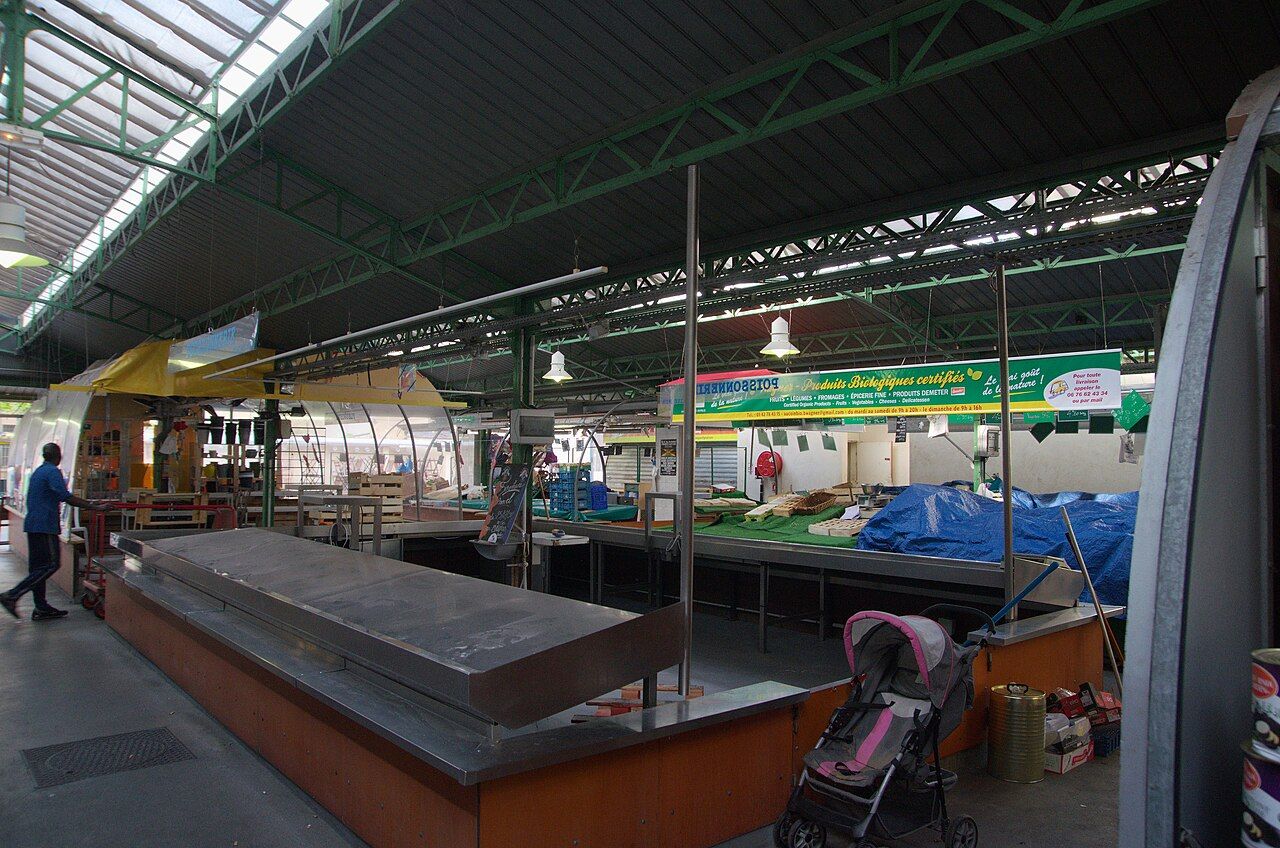
A halle is a covered market hall. Many French towns have one, and some keep timber roofs centuries old. The roof changes the market’s shape: stalls sit inside a structure built for trade, rather than out in the open air. It’s a neat bit of civic engineering.
In Brittany, the covered market hall of Le Faouët dates from the 16th century. In Paris, the Marché des Enfants Rouges in the Marais was created in 1615. It is the oldest covered market in Paris. These halls make market history part of the day’s ordinary business.
Which markets make useful route anchors?
 Popolon • BY-SA 3.0
Sarlat-la-Canéda, in the Dordogne, holds a large market on Saturday mornings. The timing gives you a clear reason to put the town on that part of your route. In Provence, L'Isle-sur-la-Sorgue holds a Sunday market mixing food stalls with antiques. That combination makes the market itself a small study in what people come to sell.
In winter, look to the truffle markets. They are held in towns such as Richerenches in Provence and Lalbenque in the Lot. The season changes what the market is for, and gives a trip another useful organising point. If the labels slow you down, keep a short glossary of the French table close by.
How do you read the stalls?
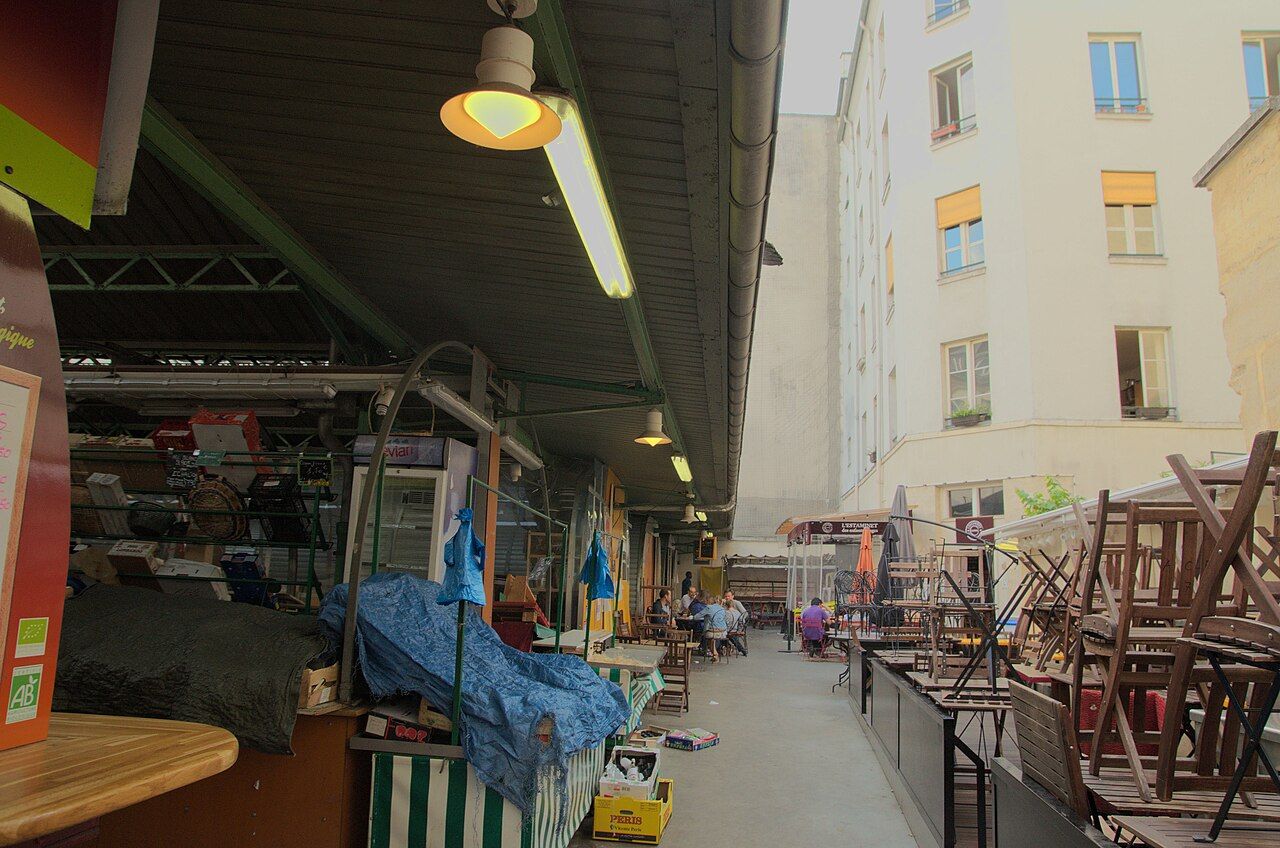
Start with the signs. French rules require the country of origin of fresh fruit and vegetables to be shown where they are sold. That makes origin part of the display, not a detail you have to guess. Look, compare, and let the market explain its own supply.
A stall marked producteur is run by someone selling what they grow or make themselves. The word tells you something about the connection between seller and goods. It’s a small label, but it changes how you read the stall.
Markets also sit within a much larger food system. Rungis, south of Paris, is one of the largest wholesale fresh food markets in the world. You don’t need to make it your market-day stop to appreciate the scale behind the stalls in town.
Can a market day fit a rail trip?
Yes: choose the market first, then give the town its place in your itinerary. Keep the day flexible enough for browsing, rather than squeezing the market between unrelated stops. A market is most interesting when you can notice its structure: the square, the hall, the signs, and the people selling what they produce.
Let the weekly rhythm set the shape of your route. The market will do its bit; even your itinerary can claim it was locally sourced.
Photos in this piece: DocteurCosmos • BY 3.0; Diego Delso • BY-SA 4.0