RegionBrussels, BelgiumBy railHigh-speed train from Paris Nord, about 1 h 25
Brussels: the Grand-Place, Horta and comic-strip walls
Take the high-speed train from Paris Nord for a French-speaking weekend in another country, with the Grand-Place, Horta’s houses and comic-strip murals.
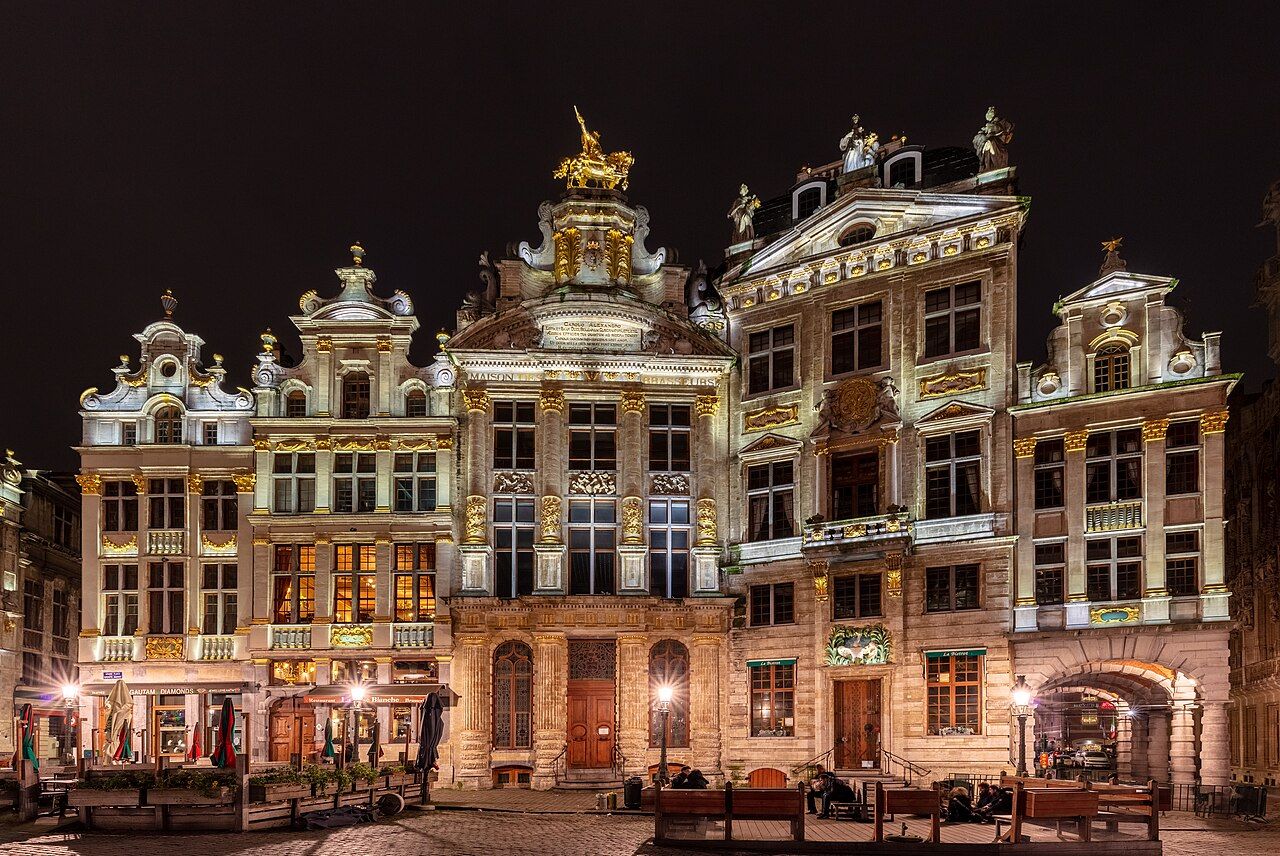 Diego Delso • BY-SA 4.0
What if your French-speaking weekend changed country, not language?
Brussels gives you a square built around civic power, houses shaped by Art Nouveau, and comic-strip scenes across central streets. The shift is more than a change of scenery: Brussels is in Belgium, and French remains the language most spoken.
The numbers: Paris Nord to Brussels-Midi by high-speed train, about 1 hour 25 minutes.
What should you notice at the Grand-Place?
Start with the Town Hall, built in the 15th century. Its tower rises about 96 metres, making the square’s civic ambition easy to read. UNESCO inscribed the Grand-Place in 1998. In August of even-numbered years, a carpet of begonias covers it (a very large floral carpet, by any measure).
Can you get by in French?
Brussels is officially bilingual in French and Dutch, though French is the language most spoken. That makes this a useful place to listen for how official bilingualism and everyday speech differ. For another city in the wider European conversation, see Europe's other parliament city.
Where does Horta fit into the story?
In 2000, UNESCO inscribed the major town houses of Victor Horta in Brussels, recognising them as works of Art Nouveau. Look for the change in architectural thinking: not simply a façade to admire, but houses whose design belongs to a named movement. That gives your Brussels reading a second layer, beyond the old civic square.
What about murals and the bronze boy?
Murals of comic-strip scenes decorate walls across many streets in central Brussels. Keep your eyes on the walls as you move through the centre; the city’s drawn stories are part of its street-level texture. The bronze Manneken Pis statue was first cast in 1619 by Jérôme Duquesnoy the Elder. Its history is unusually precise for a small figure.
Why finish with the Atomium?
Built for the 1958 World’s Fair, the Atomium represents an iron crystal magnified 165 billion times. It turns a structure too small to see into a city landmark you can recognise. That is a neat Brussels finale: civic history, architectural ideas, comic-strip walls, then science made enormous. The Atomium has handled the magnifying; you can leave your plans small.
Photos in this piece: John Samuel • BY-SA 4.0; Diego Delso • BY-SA 4.0; Maksim Sokolov (maxergon.com) • BY-SA 4.0