Carnet / Provence to the Pyrenees
RegionOccitanie (Hautes-Pyrénées)By railTrain or night train to Lourdes, then bus
The Cirque de Gavarnie: an easy walk to a vast view
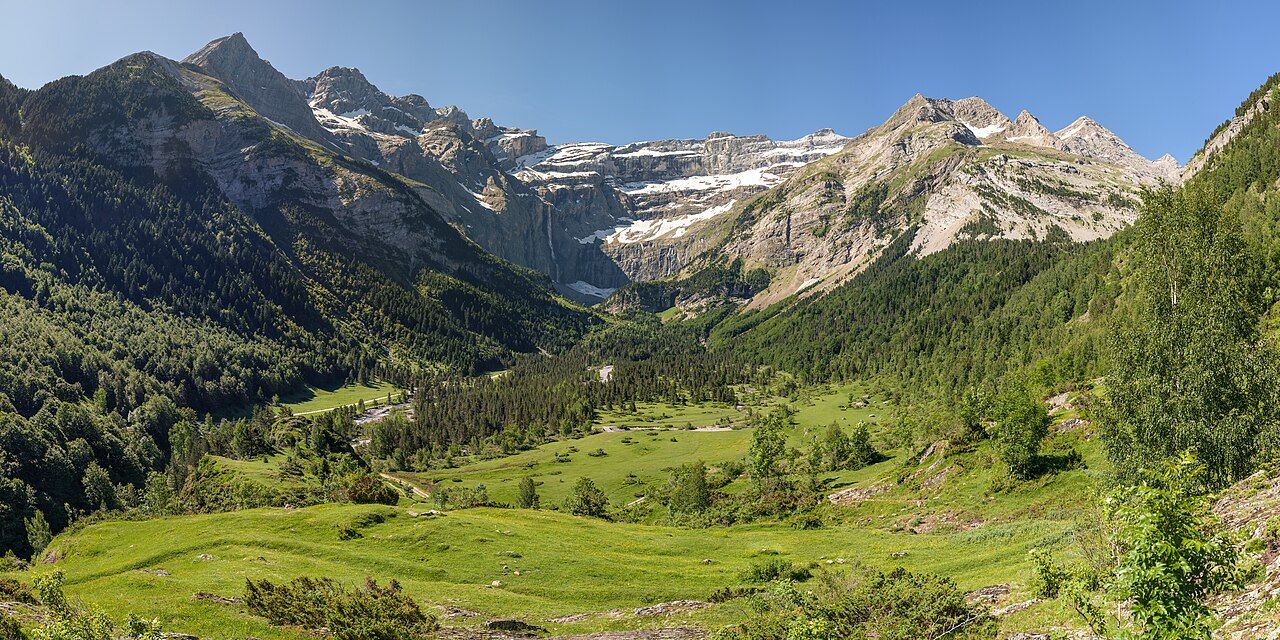
An easy valley walk leads from Gavarnie village to limestone walls and a waterfall on a very large scale.
 Benh LIEU SONG • BY-SA 2.0
What can an easy valley walk deliver in the Pyrenees?
The Cirque de Gavarnie answers with limestone walls about 1,500 metres high. At their foot, the Grande Cascade drops about 420 metres. You walk from Gavarnie village to this glacial amphitheatre, then return by the same route. It is a straightforward outing with outsized scenery.
The numbers: about an hour and a half each way; walls about 1,500 metres high; waterfall about 420 metres. The setting is Occitanie (Hautes-Pyrénées), in the central Pyrenees.
How long is the walk?
Allow about an hour and a half from Gavarnie village to the foot of the cirque. The return takes about the same time. Think of it as a valley walk, not a scramble to the ridge. The route’s appeal is the gradual arrival at the enormous limestone bowl. Keep the shape in mind as you walk: the walls curve around the valley like an amphitheatre.
This is the useful distinction: you do not need a high route to reach the foot of a high spectacle. The walk stays focused on the valley and its scale. There is no need to make the outing more complicated than that. The cirque supplies the drama; the walk gives you time to take in how it is built.
What makes the cirque so striking?
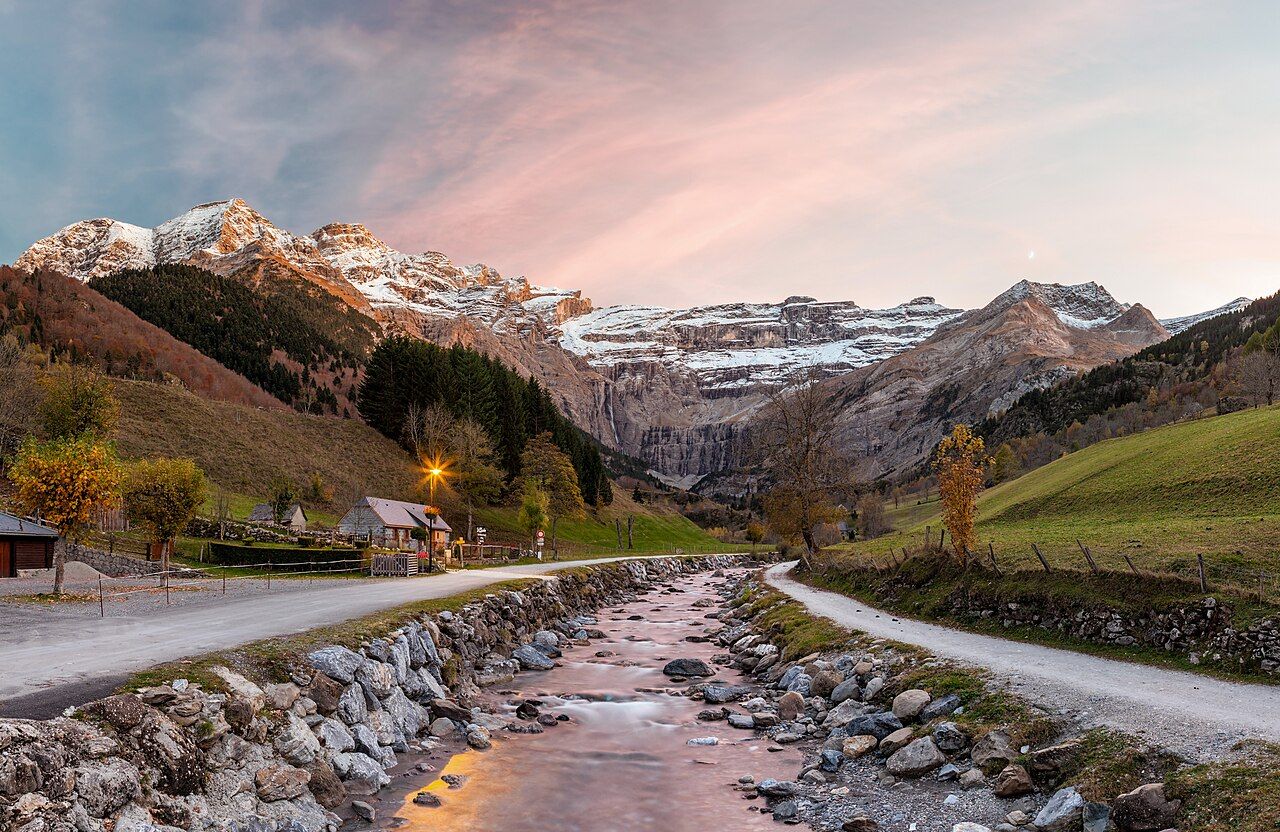
Start with the geology. The Cirque de Gavarnie is a glacial amphitheatre, with limestone walls rising about 1,500 metres. That combination tells you what you are looking at: a broad, curved form shaped by glacial forces, framed by pale rock. It is less a single peak than a whole wall of mountain, gathered around the valley.
Then look for the Grande Cascade. Its fall of about 420 metres makes it one of the highest waterfalls in mainland Europe. The waterfall gives the vast rock face a clear point of focus. You can take in the full curve first, then pick out the water dropping through it.
 Moahim • BY-SA 4.0
What else gives the place its scale?
Above the cirque, the Brèche de Roland cuts a notch about 40 metres wide into the ridge. Legend says Roland made it with his sword. It is a neat change of scale: from the enormous amphitheatre below to one narrow gap overhead. The story is a legend, but the notch itself gives your eyes another detail to find.
There is a wider history here, too. Pyrenees National Park was created in 1967. Pyrénées-Mont Perdu, which includes the Cirque de Gavarnie, received UNESCO World Heritage status in 1997. These facts help place the walk within a landscape valued beyond its impressive proportions.
Brown bears, reintroduced from Slovenia from 1996, live in parts of the Pyrenees. The GR10 crosses the French Pyrenees from Hendaye on the Atlantic to Banyuls-sur-Mer on the Mediterranean. Those are broad regional details, not reasons to turn this short walk into a grand traverse.
How do you reach Gavarnie?
Lourdes, about 50 kilometres north of Gavarnie, has the nearest main railway station. The rail approach is train or night train to Lourdes, then bus. That gives the outing a simple shape: reach the valley, walk to the foot of the cirque, and return.
If your French travels also include the surf and cliffs of the Basque shore, this is a very different kind of scale. Here, the valley draws your eye upwards, from the walk to the waterfall and limestone walls. No summit plan required.
The cascade does the dramatic falling; your job is not to compete.
Photos in this piece: Hermes from mars • BY-SA 3.0; Kabelleger / David Gubler • BY-SA 3.0; Skola19 • BY-SA 4.0