Carnet / Provence to the Pyrenees
RegionNouvelle-Aquitaine (Pays basque)By railTGV from Paris Montparnasse, about 4 h
The Basque coast, from Biarritz to Hendaye
A weekend itinerary from Biarritz to Hendaye, with a rack-railway climb up La Rhune and Bayonne’s river meeting behind the coast.
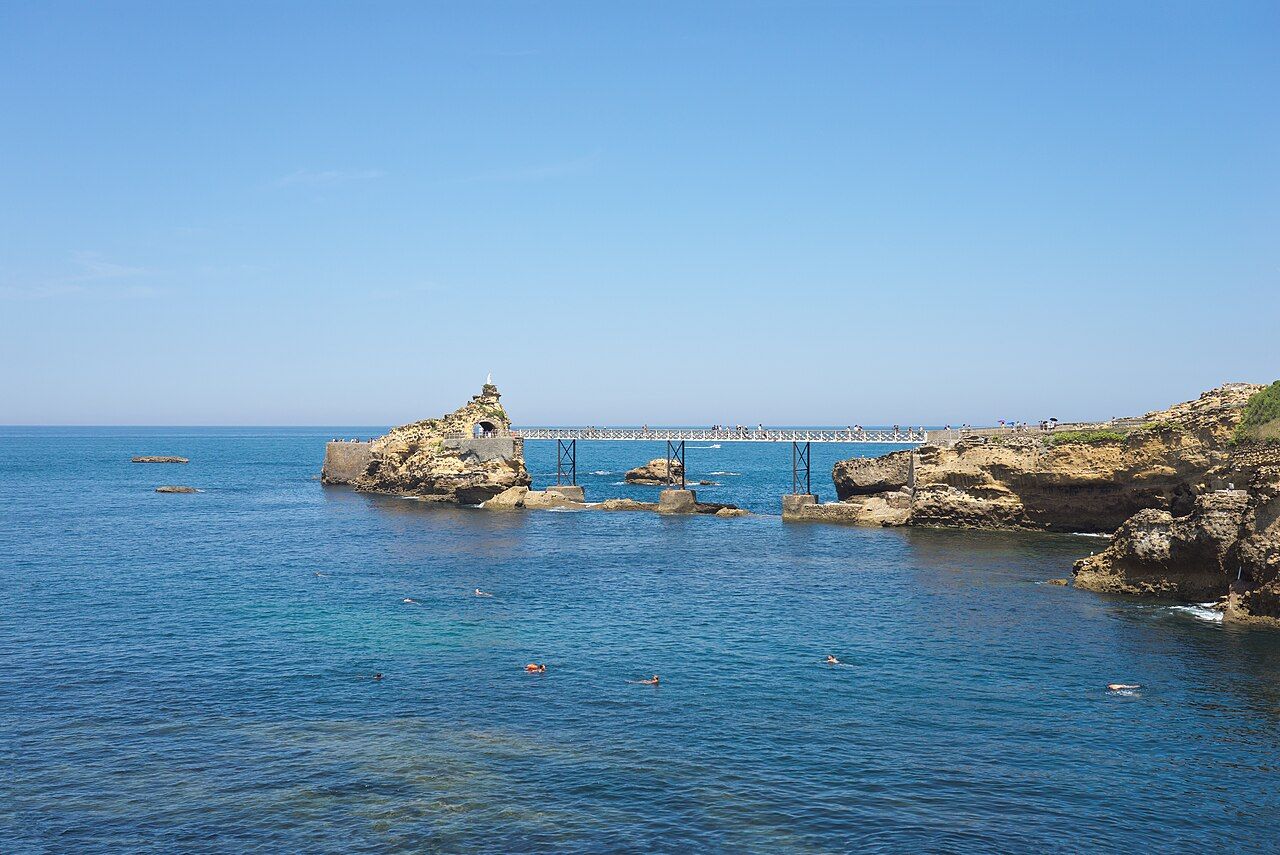 Jörg Braukmann • BY-SA 4.0
What happens when you pair a coast walk with a mountain railway?
The numbers: TGV from Paris Montparnasse, about 4 h; La Rhune, 905 metres; surfing began in 1957.
Biarritz
Morning. Begin in Biarritz, where resort history shares space with surfing. The French Basque coast runs from Anglet to Hendaye, so this weekend follows its southern reach.
Biarritz became fashionable after Empress Eugénie, wife of Napoleon III, had a villa built here in the 1850s. That simple mechanism changed the town’s fortunes: a villa helped turn a coastal place into a resort.
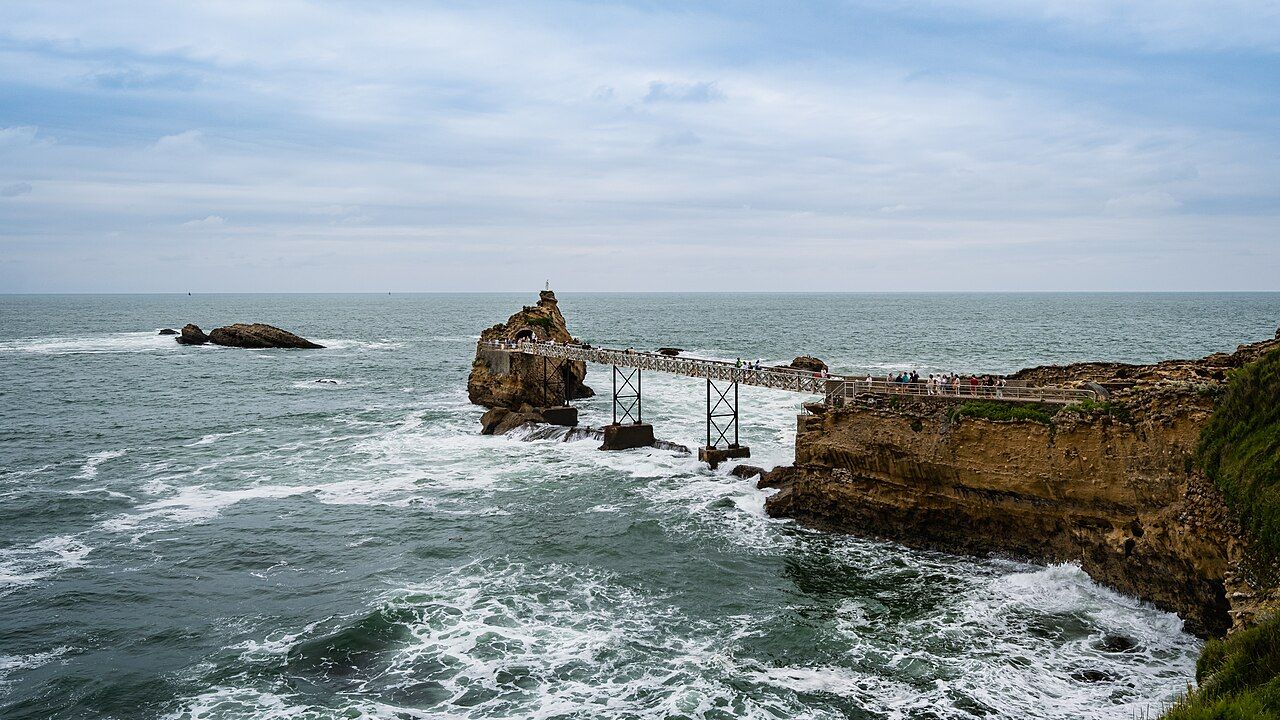
At the Rocher de la Vierge, look for the iron footbridge joining rock to shore. It is a neat bit of practical engineering, making the connection visible beneath your feet.
Surfing in France began here in 1957. The contrast is part of Biarritz: imperial resort history on one side, a newer sporting chapter on the other. You need not choose which story gets the first look.
Saint-Jean-de-Luz
Midday. Continue the coast story at Saint-Jean-de-Luz, a fishing port with a royal wedding in its past. Louis XIV married Maria Theresa of Spain here in 1660.
That detail gives the port a second role without erasing the first. Keep the fishing-port identity in view; the wedding is a sharp historical turn, not the whole place.
From here, the Corniche Basque road runs between Saint-Jean-de-Luz and Hendaye, above layered flysch cliffs. The word flysch names the layers under your gaze, and the road traces their edge. You get geology and route-making in the same frame.
 Christian David • BY-SA 4.0
For the walking part, let the coast’s sequence do the organising: Biarritz, Saint-Jean-de-Luz, then Hendaye. The supplied landmarks make a clear line, even if the story changes character along it.
Hendaye
Late afternoon. Carry the coast walk towards Hendaye, at the Spanish border. The French Basque coast ends here, while the Corniche Basque road has already shown how cliffs shape the route.
Keep your attention on those layered flysch cliffs. They are not just a backdrop; their visible layers explain why this stretch has such a distinct edge. If you want another landscape for later, the great cirque of the high Pyrenees belongs on that list.
La Rhune
Next morning. Swap the coast for La Rhune, climbed by rack railway from the Col de Saint-Ignace. The railway is the mechanism here: its rack system takes you up the mountain, rather than leaving the climb to your legs.
La Rhune reaches 905 metres. That height gives the weekend a different scale, after the road above the cliffs. You move from a coast shaped by rock layers to a mountain reached by engineered grip.
Keep this as the weekend’s mountain chapter, with the railway as its focus. The rack railway is the point: a specific way up, from a specific starting place. You can let the coast walk and the climb feel like separate halves.
Bayonne
Bayonne sits behind the coast as the main town of the French Basque Country. It stands where the Adour and the Nive meet, a useful piece of geography to carry into the weekend’s map.
The Basque language is Euskara, unrelated to any other living language in Europe. Between Bayonne, the coast and La Rhune, you have three ways into the region: its meeting rivers, its layered shore, and its distinct language.
Photos in this piece: Benh LIEU SONG • BY-SA 2.0; Hermes from mars • BY-SA 3.0; Kabelleger / David Gubler • BY-SA 3.0