Carnet / Loire, Dordogne & Auvergne
RegionNouvelle-Aquitaine (Dordogne)By railTER to Les Eyzies or Brive, then road
Lascaux IV and the painted caves of the Vézère
See Lascaux IV’s full replica in Montignac, then follow the cave story to Font-de-Gaume, where small visitor groups can still see prehistoric polychrome paintings.
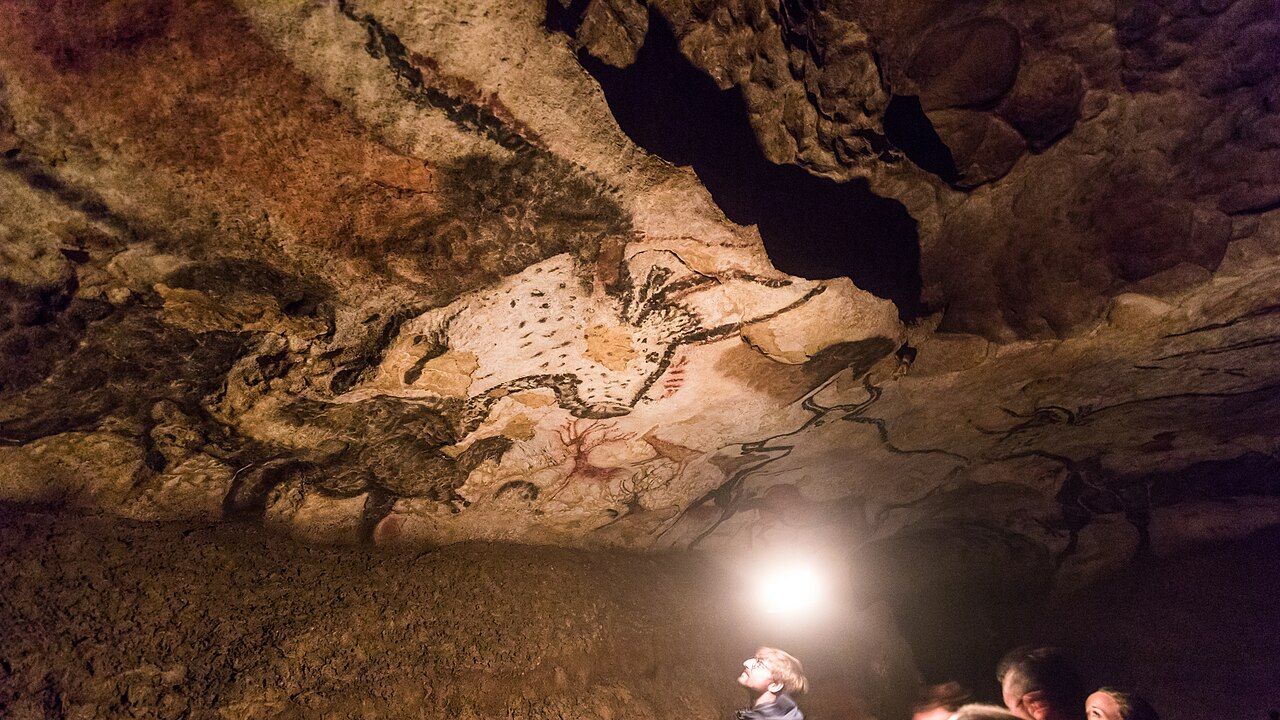 Raimond Spekking • BY-SA 4.0
You start in Montignac, with a copy of a cave story. Then you follow that story towards one original. It is a satisfying order: first grasp the scale, then meet the fragile exception.
The numbers: discovered in September 1940; paintings about 17,000 years old; Lascaux IV opened December 2016.
Nouvelle-Aquitaine, Dordogne. By rail: TER to Les Eyzies or Brive, then road.
What happened at Lascaux?
Four teenagers discovered the Lascaux cave in September 1940. It lies in the Vézère valley of the Dordogne. The paintings are about 17,000 years old, which makes the cave’s modern history feel unusually brief beside them.
The original cave closed to the public in 1963. Visitors’ breath and the lights were damaging the paintings. That closure explains the unusual arrangement today: you cannot visit the original Lascaux, but you can visit a full replica.
Why begin with Lascaux IV?
Lascaux IV opened in Montignac in December 2016. It is a full replica of the cave. Begin here, then: the copy gives you the complete version of Lascaux’s story without pretending to be the original.
There was an earlier step. Lascaux II, a partial replica, opened in 1983. That distinction matters: partial and full are not interchangeable labels. Lascaux IV is the full copy; Lascaux II was not.
You can read the two replicas as different answers to one problem: how to let people encounter the paintings while the original stays closed. That makes the sequence more than a simple comparison of copies.
 Raimond Spekking • BY-SA 4.0
Look out for the largest animal painted at Lascaux: an aurochs about 5 metres long. It is in the Hall of the Bulls. That precise detail gives your eye something concrete to hold onto amid the larger story.
Where can you see an original cave?
Go on to Font-de-Gaume near Les Eyzies. It is one of the few caves with prehistoric polychrome paintings still open to small groups of visitors. Here the original is the point. Keep the distinction clear: Lascaux itself remains closed, while Font-de-Gaume is open to small groups.
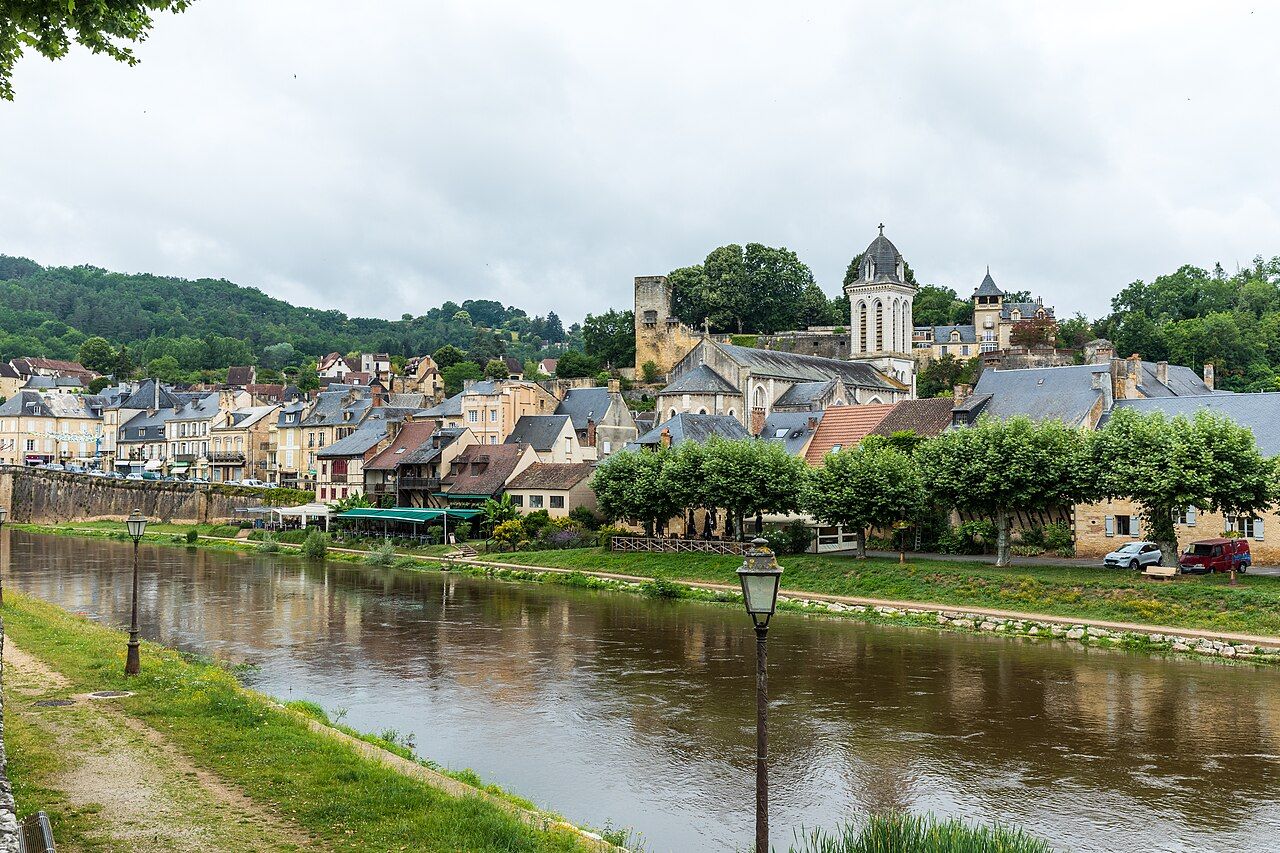
Les Eyzies lies about 25 kilometres down the Vézère from Montignac. It is home to the National Museum of Prehistory. The geography gives your sequence a simple shape: Montignac first, then downstream towards Les Eyzies.
How does the valley fit the story?
In 1979, the prehistoric sites and decorated caves of the Vézère valley received UNESCO World Heritage status. Lascaux belongs to a wider landscape of prehistoric sites, not a story sealed inside one cave.
So take the replica first, then the original at Font-de-Gaume. If your wider French route includes the volcano above Clermont-Ferrand, that is another kind of deep-time landscape. Keep this part of the trip focused on the Vézère, where the copy and the original make a particularly clear pair.
That sequence is the useful trick: see Lascaux IV in Montignac, then continue towards Font-de-Gaume near Les Eyzies. You get the full replica and, afterwards, one of the few open caves with prehistoric polychrome paintings.
Photos in this piece: Another one of my pictures: This photograph was taken by Medium69 (Wil • BY-SA 4.0; Dietmar Rabich • BY-SA 4.0; Gzen92 • BY-SA 4.0