RegionGrand Est (Alsace)By railTER from Strasbourg, about 30 min
Colmar: Little Venice, the altarpiece and the wine route
Take Colmar from the houses beside the Lauch to the Isenheim Altarpiece, then towards Alsace wine-route villages. Strasbourg is close, but an overnight suits the range.
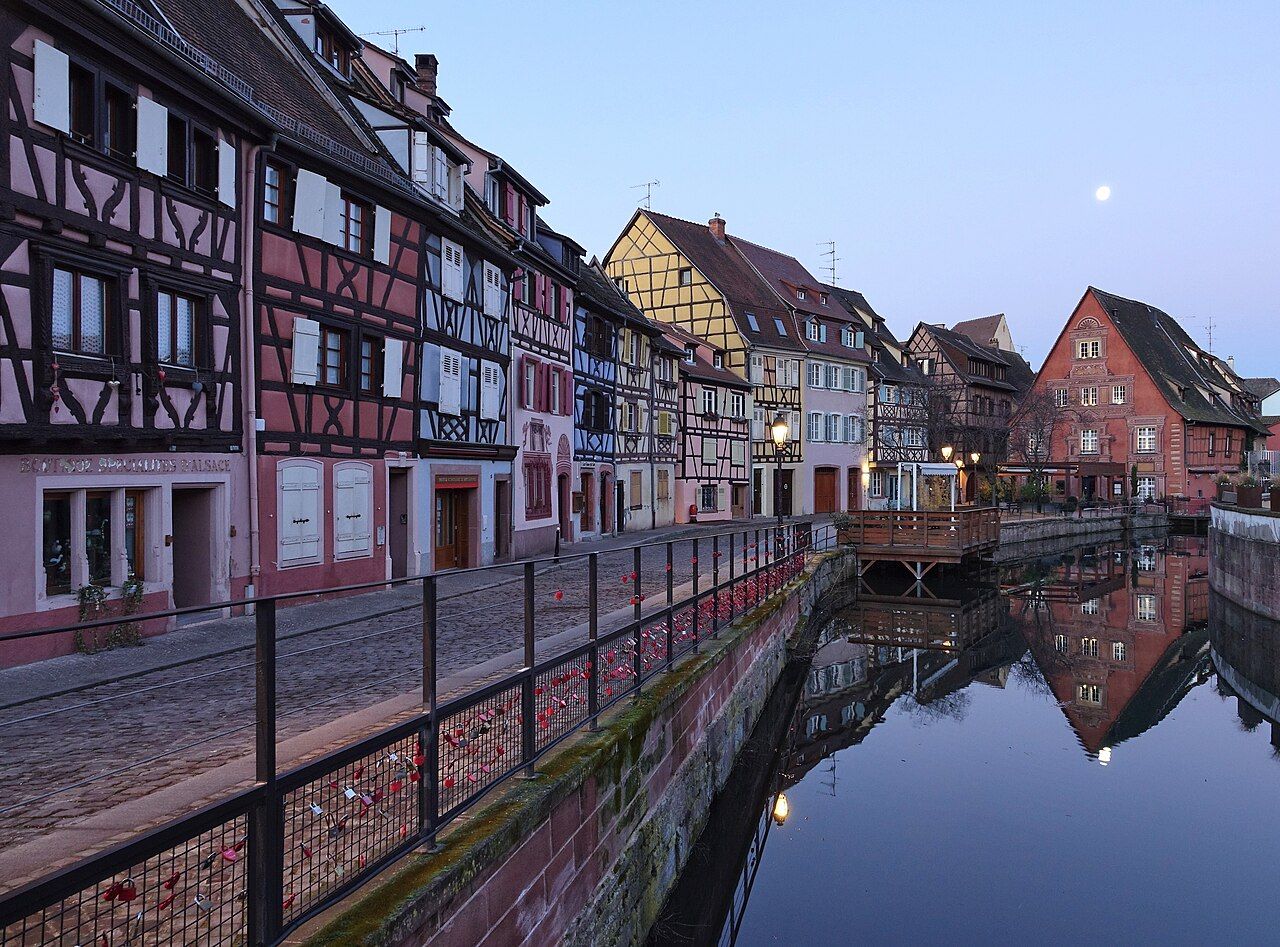 Gzen92 • BY-SA 4.0
Can Colmar work as a day trip from Strasbourg?
From the cathedral city on the Ill, take the regional train. It reaches Colmar in about 30 minutes. The numbers: about 30 minutes by regional train from Strasbourg. That is a neat day-trip distance, but don’t stop there. Colmar lies on the Alsace wine route, at the foot of the Vosges. An overnight gives the old town, museum and villages room. You can take in the town without making every stop compete for the same few hours.
What does Little Venice actually follow?
It follows the river Lauch past half-timbered houses. The name points you towards water, but the river itself is the useful detail. Colmar’s old town gives that riverside quarter a larger frame. Notice how the houses meet the Lauch; that relationship does the work. I’d give this stretch time, rather than treating it as a name to tick off.
Why leave time for the museum?
The Unterlinden Museum keeps the Isenheim Altarpiece. Matthias Grünewald painted it between about 1512 and 1516. That gives your visit a clear historical anchor, not simply another old-town stop. Give the altarpiece its own pause in your plan. Your day then holds both the river’s course through the quarter and a work made centuries ago. Those are different kinds of looking, and Colmar gives you both.
What else belongs in the old town?
The Koïfhus is the old customs house, built in 1480. It is Colmar’s oldest public building. Frédéric Auguste Bartholdi, sculptor of the Statue of Liberty, was born in Colmar in 1834. These details give the town more than one story to follow: trade, buildings, art and a sculptor’s beginnings. You do not need to force them into one grand theme. Let each fact add another layer.
Why does the overnight argument extend beyond town?
The Alsace wine route runs about 170 kilometres, from Marlenheim to Thann. Around Colmar, Riesling, Gewurztraminer and Pinot Gris are among the main grapes grown. The villages beyond Colmar widen the picture from town streets to the route itself. Colmar is also one of the driest towns in France. The mechanism is the Vosges: they shelter it from rain coming from the west. That mountain shelter helps explain the setting, rather than merely decorating it. Stay overnight, and the town and wine route can each have their own chapter. The route covers about 170 kilometres; your day, rather less.
Photos in this piece: Jebulon • Public Domain on Commons; Pline • BY-SA 3.0
