RegionBourgogne-Franche-ComtéBy railTGV to Dijon, then TER to Beaune
Beaune’s Hôtel-Dieu, from hospital to vineyard slopes
Beaune’s glazed roof leads into the hospital’s charitable history, then towards the ramparts and Burgundy’s named vineyard plots.
 Jebulon • Public Domain on Commons
Beaune
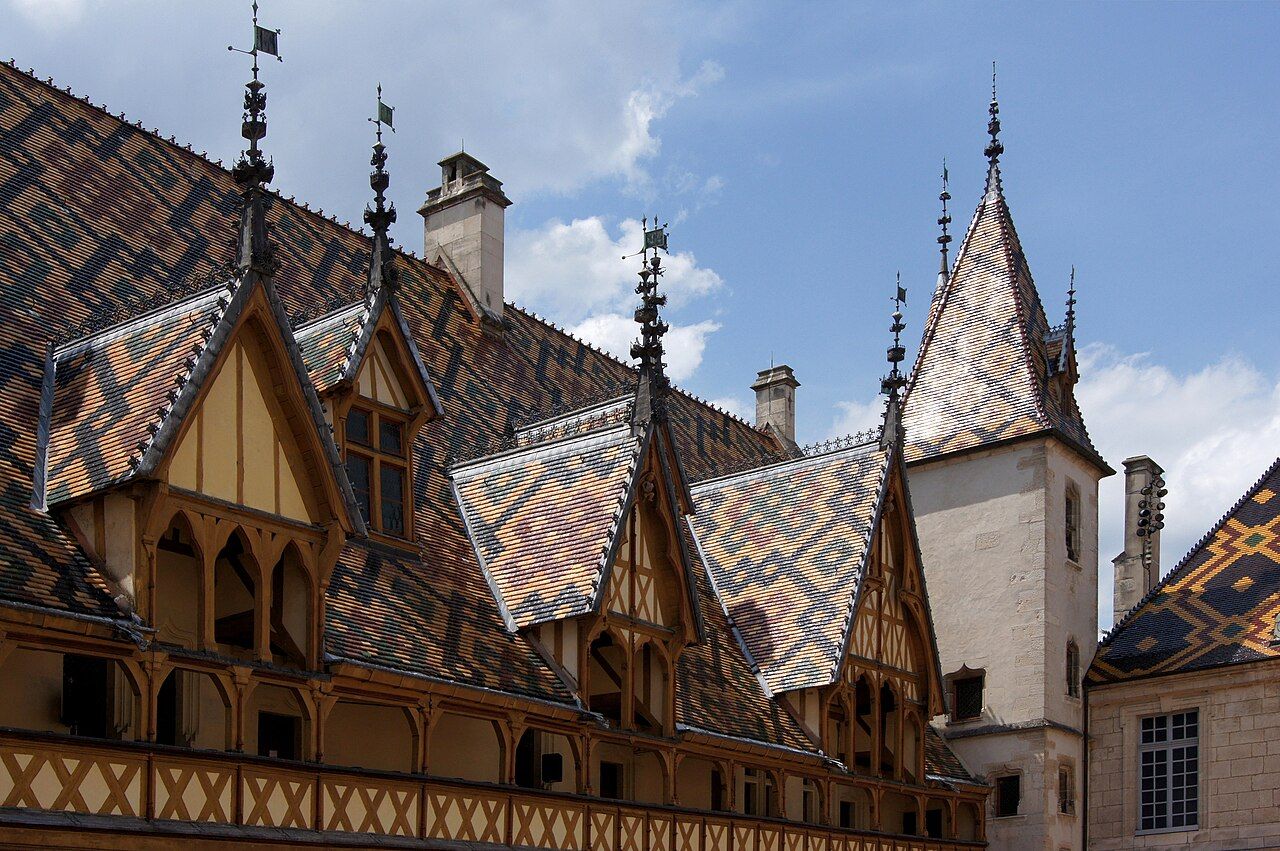
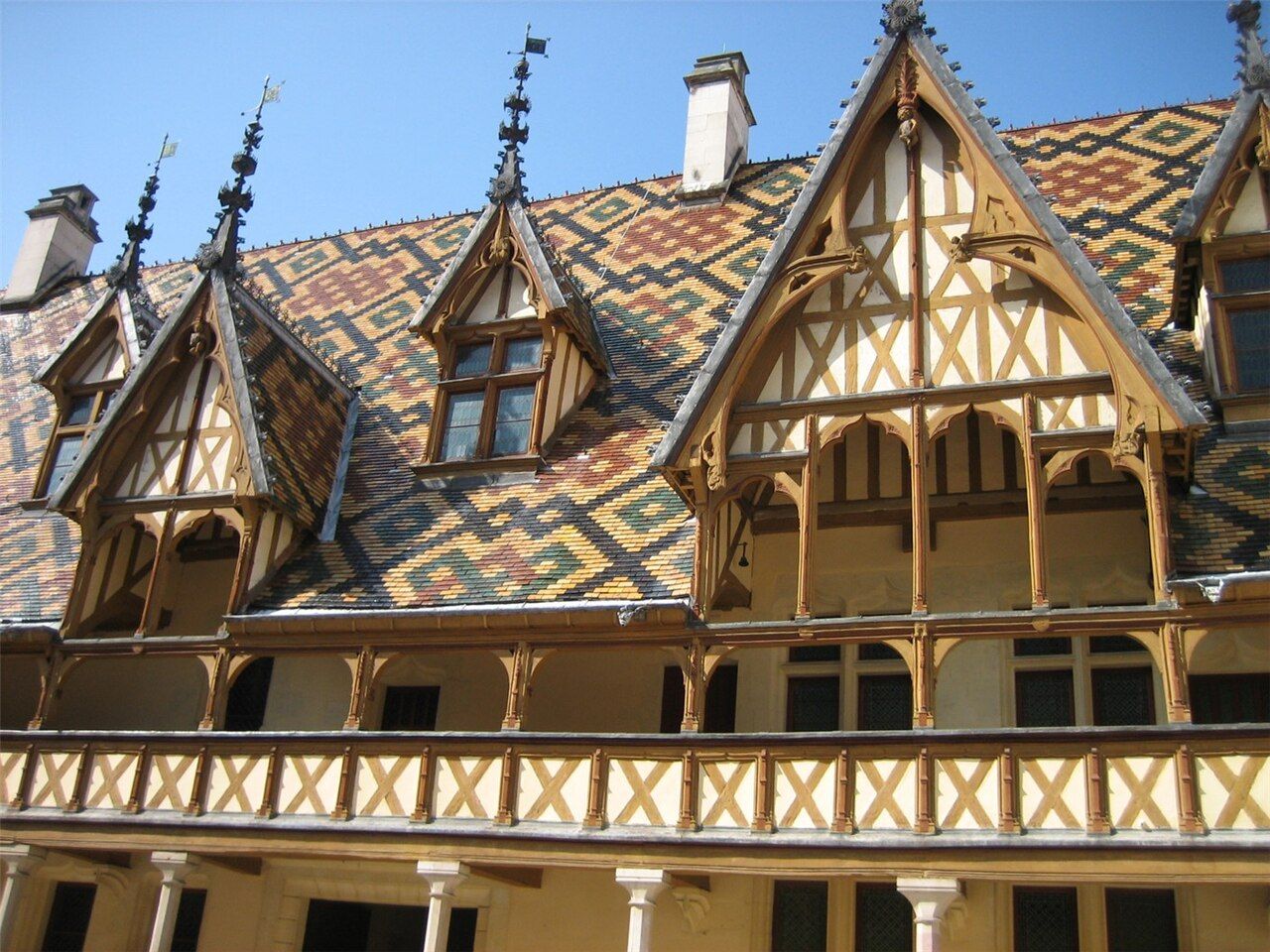
Red, brown, yellow and green glazed tiles set the scene. The Hôtel-Dieu is not just a handsome roof in Beaune. It began as care for the poor, and remains central. Follow that thread from hospital to vineyards.
The numbers: founded in 1443; patients cared for until 1971; Dijon to Beaune, about 20 minutes by regional train.
Begin with the foundation, because it explains the building’s purpose. The Hôtel-Dieu was founded in 1443 by Nicolas Rolin. He served as chancellor of the Duke of Burgundy. He created it as a hospital for the poor. That purpose gives you the right starting point. Read its story through charity before reading it through decoration. Beaune’s landmark began as care, not display. The town’s later story still gathers around that original purpose.
Look up, then widen your view to the old centre. The roof’s glazed tiles use red, brown, yellow and green. Use those colours as a visual anchor while walking through Beaune. Beyond the Hôtel-Dieu, medieval ramparts ring the old centre. Tree-lined boulevards follow that ring, framing a town shaped by earlier defences. The hospital and its surroundings belong in one picture: institution, boundary, and everyday town. Keep the roof in mind as you follow the town’s edges.
Go inside next, and treat the museum as part of the story. The Hôtel-Dieu cared for patients until 1971; it is now a museum. Rogier van der Weyden’s Last Judgement polyptych is displayed here. That pairing makes the change plain: care has ended, but the building’s public story continues. Give the artwork attention, rather than treating the roof as the whole visit. The shift from hospital to museum is the story’s hinge. You are following one institution through different uses.
Then connect the hospital’s past to its continuing charity. Each November, a charity wine auction is held in Beaune. It raises money for the hospital foundation, linking wine with care. That is not an unrelated flourish: the institution began by serving the poor. The auction gives you a modern thread through that founding purpose. The Hôtel-Dieu is now a museum, yet its foundation remains part of Beaune’s charitable life. Keep both roles in view as you move through town.
 No machine-readable author provided. Nguyenld assumed (based on copyri • BY-SA 3.0
Côte d'Or
Now turn to the Côte d'Or escarpment south of Dijon. Its slopes are planted mostly with Pinot Noir and Chardonnay. Burgundy’s named vineyard plots are called Climats. UNESCO inscribed the Climats as World Heritage in 2015. That name gives you a way to read the vineyard landscape: not just as slopes, but as named plots. Keep the sequence clear: escarpment, plots, grape varieties. It is a different kind of map from Beaune’s ramparts.
Make the rail leg part of your route through the story. Take the TGV to Dijon, then the TER to Beaune. Regional trains from Dijon reach Beaune in about 20 minutes. The journey links the town with the escarpment south of Dijon. If you want to keep travelling through the region, connect this visit with Burgundy's towpaths and locks. The hospital, town and vineyard slopes make a tidy sequence. The roof has done the colour-coding; your notebook can take the day off.
Photos in this piece: Pline • BY-SA 3.0; Ximonic, Simo Räsänen • BY-SA 3.0