RegionBourgogne-Franche-ComtéBy railTER to Dijon or Montbard
Burgundy’s canals at walking pace
Take the slow route across Burgundy: follow a towpath, watch the locks, and cross beneath the summit before looking up to Châteauneuf-en-Auxois.
 Pline • BY-SA 3.0
Want to cross Burgundy without rushing past its workings?
The numbers: Canal de Bourgogne, about 242 kilometres and 189 locks; Canal du Nivernais, about 174 kilometres. TER to Dijon or Montbard.
Start by choosing the waterway that suits your pace. Canal de Bourgogne links the Yonne and Saône, while Canal du Nivernais links the Yonne and Loire. Both give you a long, unhurried line across the region. On foot or by bike, let the water set the rhythm.
For a route made for wheels, follow the Canal de Bourgogne towpath. It is a cycle route for much of its length, so you can cover more ground by bike or take it steadily on foot. The canal opened in 1832; its 189 locks make the route’s engineering hard to miss.
Keep the summit tunnel in your plan. At Pouilly-en-Auxois, the canal passes beneath its summit through a tunnel about 3.3 kilometres long. That is the neat trick: rather than crossing over the high ground, the waterway goes underneath it. Follow the route’s long, quiet logic.
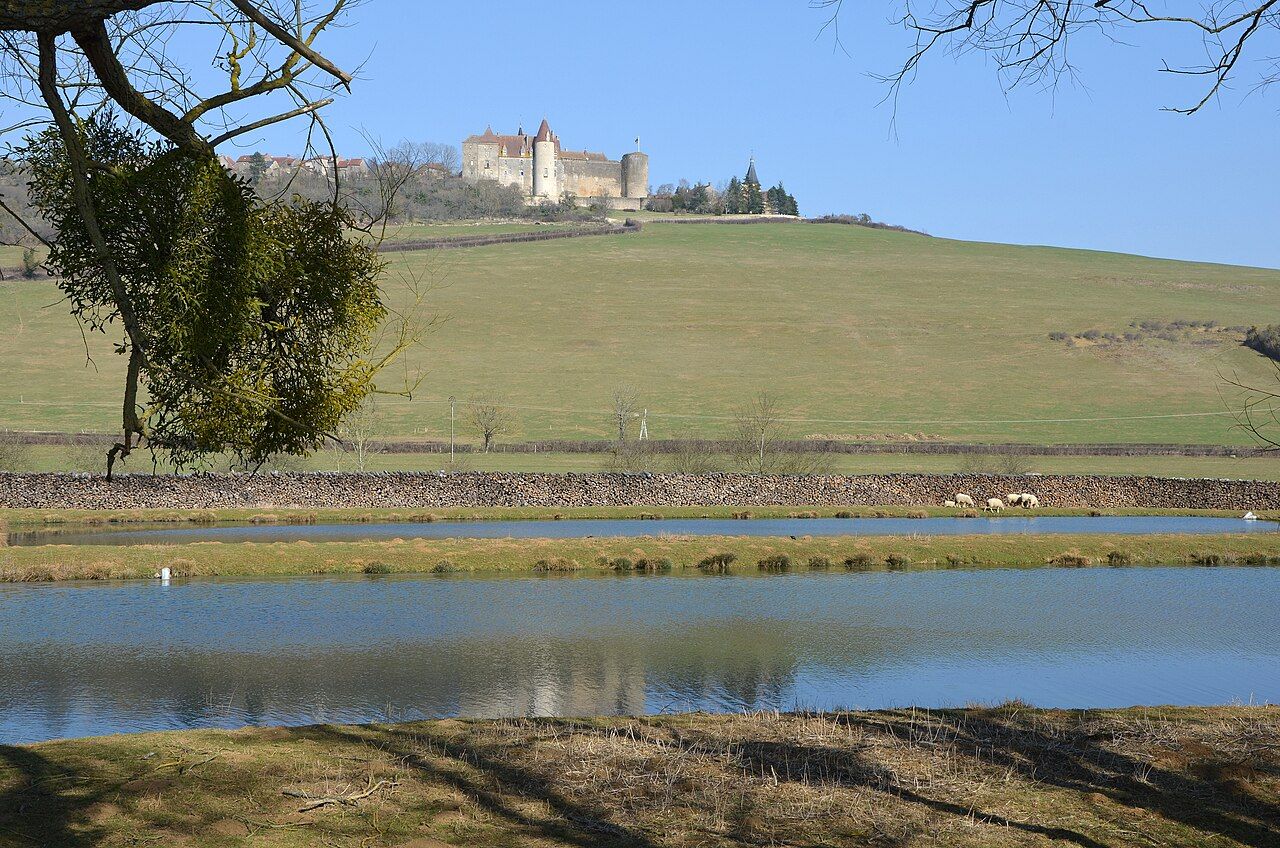
Look up from the canal at Châteauneuf-en-Auxois. The hill village looks down on the waterway from its medieval castle. I would give this change of perspective time: you have followed the canal below, and now the village sits above it.
Choose Canal du Nivernais when you want the other cross-country line. Its link runs between the Yonne and Loire, over about 174 kilometres. Pleasure boats have largely replaced commercial barges on the Burgundy canals, so the working route now has a slower sort of traffic.
Add a nearby piece of history if Montbard is part of your rail plan. The Abbey of Fontenay, near Montbard, was founded in 1118 and has UNESCO World Heritage status. For another city-shaped pause, keep the hospital with the glazed roof in mind.
Pick a towpath, then let the locks do the counting. They have had rather more practice.
Photos in this piece: Ximonic, Simo Räsänen • BY-SA 3.0; Michael.F.H.Barth • BY-SA 4.0