RegionGeneva, SwitzerlandBy railTGV from Paris Gare de Lyon, a little over 3 h
Geneva on foot: lake, fountain and Reformation
A walk traces the lake outlet, climbs through the old town, then reads Geneva through its Reformation landmarks and international institutions.
 John Samuel • BY-SA 4.0
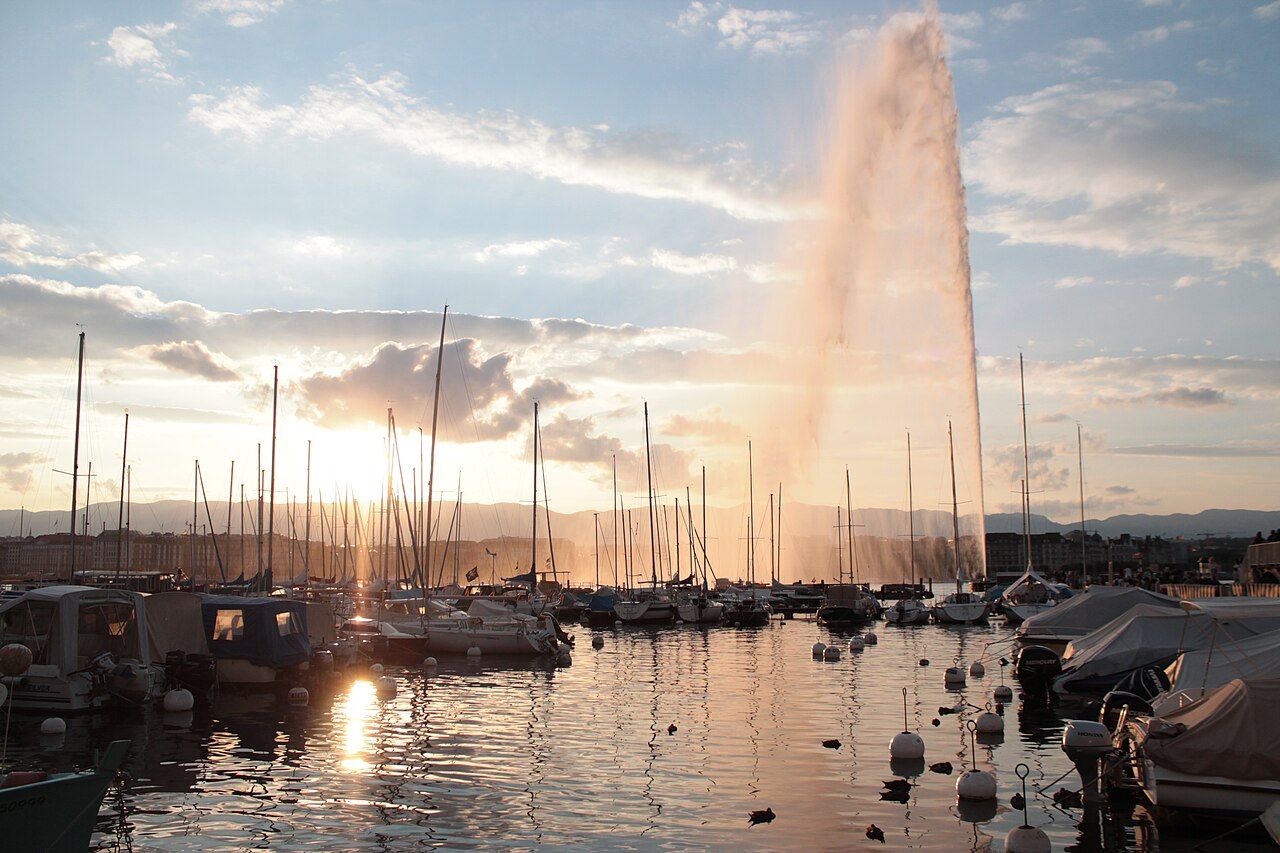
Water lifts above Geneva, while the lake drains into the Rhône. Start here: the city sits at Lake Geneva’s south-western end.
The numbers: direct trains from Paris Gare de Lyon, a little over three hours; fountain, about 140 metres.
Begin beside Lake Geneva and notice its shared geography. It covers about 580 square kilometres, shared between Switzerland and France. Walk beside the water towards the point where the Rhône leaves. That outlet gives Geneva its neat geographical hinge. The lake offers a close view; its shared waters open onto a wider map.
Stay beside the lake before turning your attention upwards. The Jet d’Eau throws water about 140 metres into the air. It is a wonderfully direct piece of city engineering: water, height, spectacle. Let it orient you, then leave the shoreline for the old town. The fountain makes a striking marker between the lake and your uphill route.
Walk uphill into Geneva’s old town and make St. Pierre Cathedral your next stop. John Calvin preached here, and the towers are open to visitors. The detail matters: the cathedral places the Reformation inside the streets you are walking. Look up at the towers; they make the history feel part of the route, not a separate lesson.
Continue to the Reformation Wall in the Parc des Bastions. It commemorates Calvin and other Protestant reformers. You can see the city’s religious history made legible in stone, rather than left as a vague old-town atmosphere. That is a satisfying change of pace after the lake and cathedral.
Then widen your route beyond the old town. Geneva is the seat of the International Committee of the Red Cross, founded in 1863. The Palais des Nations houses the United Nations Office at Geneva. Beyond the city, CERN lies on the border near Geneva; the European laboratory for particle physics was founded in 1954.
For your arrival, take the high-speed lines out of Paris to Geneva. Direct trains leave from Paris Gare de Lyon and take a little over three hours. The rail link makes the French connection practical, while the lake and Rhône explain the city’s geography.
Finish with the fountain in view, if you can. It has a way of making every other landmark look underdressed.
Photos in this piece: Diego Delso • BY-SA 4.0; Maksim Sokolov (maxergon.com) • BY-SA 4.0; Dietmar Rabich • BY-SA 4.0