RegionBrittanyBy railTGV to Auray, then bus
Carnac: walking the rows of standing stones
Come to Carnac in winter, when you can usually walk among parts of its Neolithic alignments and see how Ménec, Kermario and Kerlescan lie in rows.
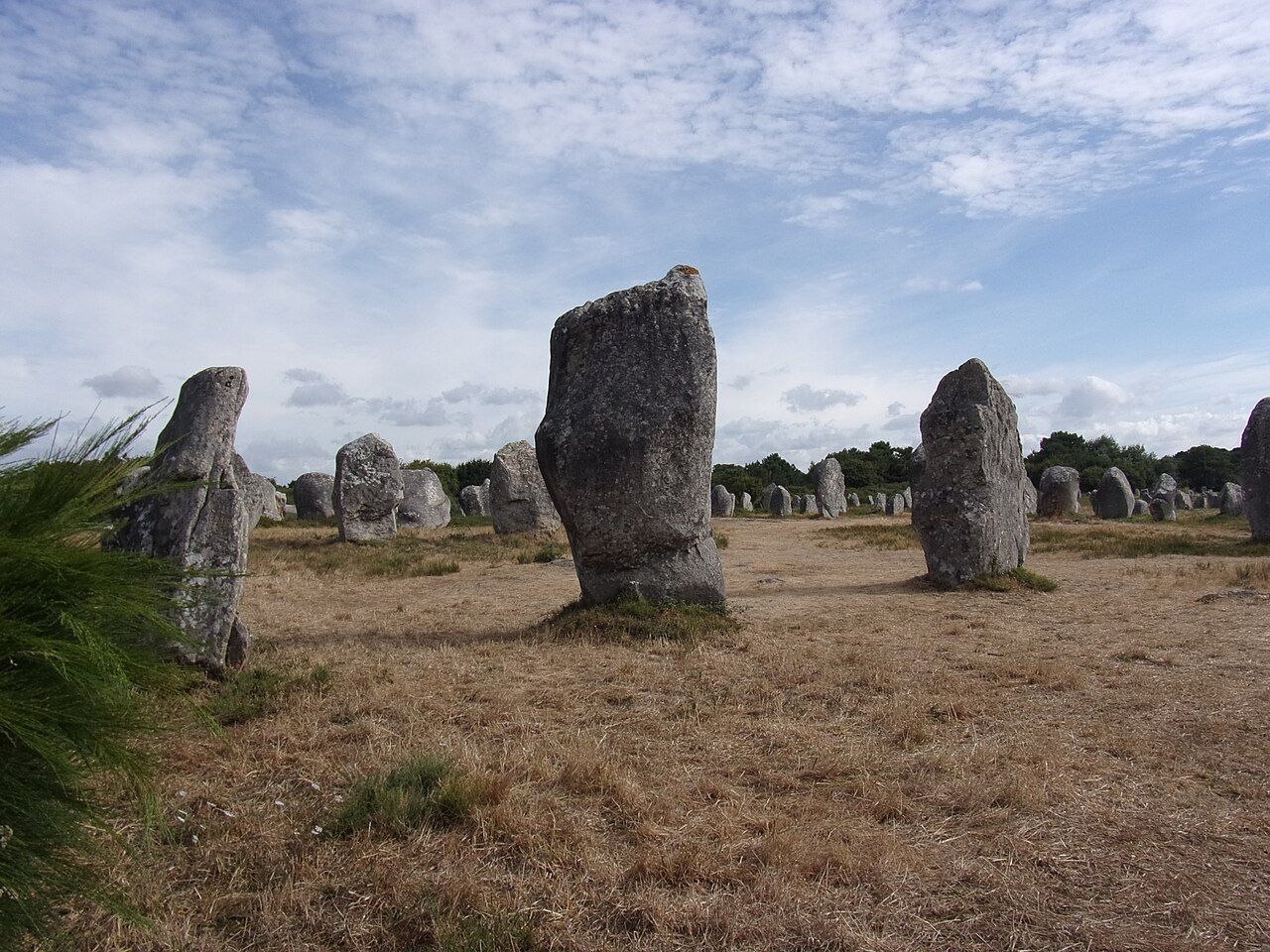 Jacquym • BY-SA 4.0
You stand before rows of stone, and the scale takes over.
The numbers: about 3,000 stones; three main alignments; about 13 kilometres from Auray.
Carnac lies on the bay of Quiberon, in the Morbihan department. Its standing stones were raised by Neolithic people, most more than 5,000 years ago. The rows make the place’s basic idea wonderfully plain: stones set in lines, across a landscape.
What are you looking at?
The three main alignments are Ménec, Kermario and Kerlescan. The word menhir comes from Breton words meaning long stone. Keep that meaning in mind as you walk: this is a landscape organised around upright stones, not a single monument.
Ménec gives you a useful place to begin reading the pattern. It has about 1,100 menhirs, set in eleven rows. That count makes the rows feel less like a scattered collection and more like deliberate arrangement. Look along them, then across them; the layout is the story.
Why come in winter?
From October to March, visitors can usually walk freely among parts of the alignments. In summer, the fields are fenced, and visits are guided. If walking between some of the stones matters to you, winter is the clear choice. You get access to parts of the rows on foot, rather than seeing the fenced fields on a guided visit.
Keep the word “parts” in view: the winter arrangement does not mean every alignment is open. Still, walking among the stones changes how you read their spacing. You can follow a row from within the landscape, rather than treating it as a distant pattern.
What else belongs in the picture?
The Saint-Michel tumulus is a Neolithic burial mound in Carnac, about 125 metres long. It adds another form to the story: not upright stones in rows, but a long mound. Put the two side by side in your mind, and Carnac becomes more than its famous alignments.
For another way to explore Brittany on foot, try Brittany's long coastal footpath.
How do you reach the stones by rail?
Auray is the nearest main railway station, about 13 kilometres away. That gives you a useful point of reference before you set out for Carnac. The stones are not at the station; they sit in the bay’s wider landscape.
Photos in this piece: Gzen92 • BY-SA 4.0; PIERRE ANDRE LECLERCQ • BY-SA 4.0; Carsten Steger • BY-SA 4.0